Marks the Launch of the FWF Special Research Programme
Neutral-Atom Quantum Systems with High Connectivity — 11 June 2026, TU Wien
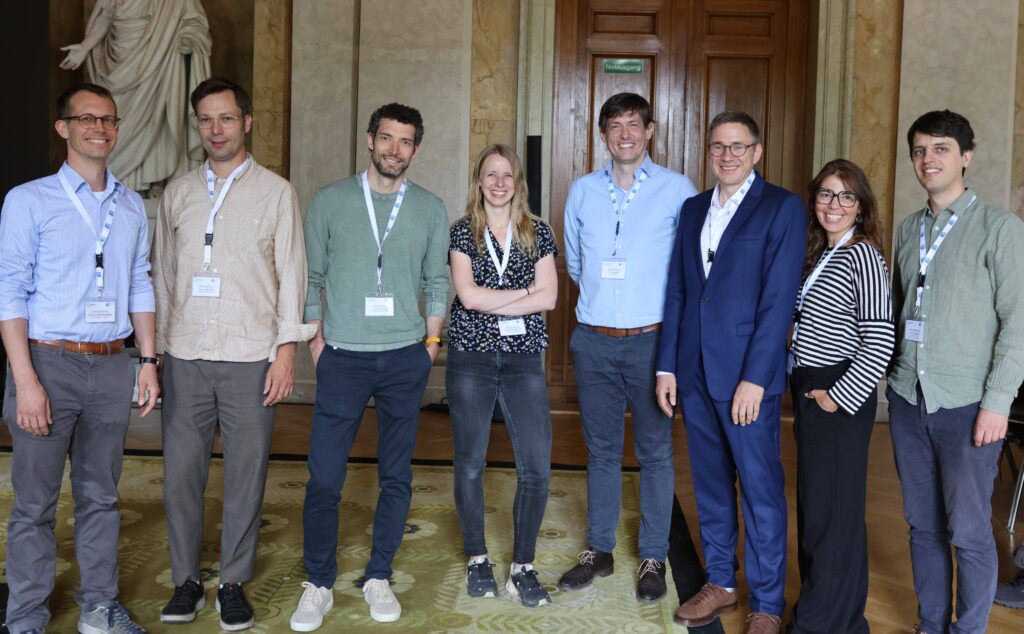
On 11 June 2026, researchers from Austria and Germany gathered at TU Wien to celebrate the launch of Qnnect, a new FWF-funded Special Research Programme dedicated to „Neutral-Atom Quantum Systems with High Connectivity.“ The event marked the official start of a four-year initiative that brings together scientists from TU Wien, the University of Vienna, ISTA, the University of Innsbruck, and LMU Munich to advance the next generation of quantum simulators based on ultracold atoms and molecules.
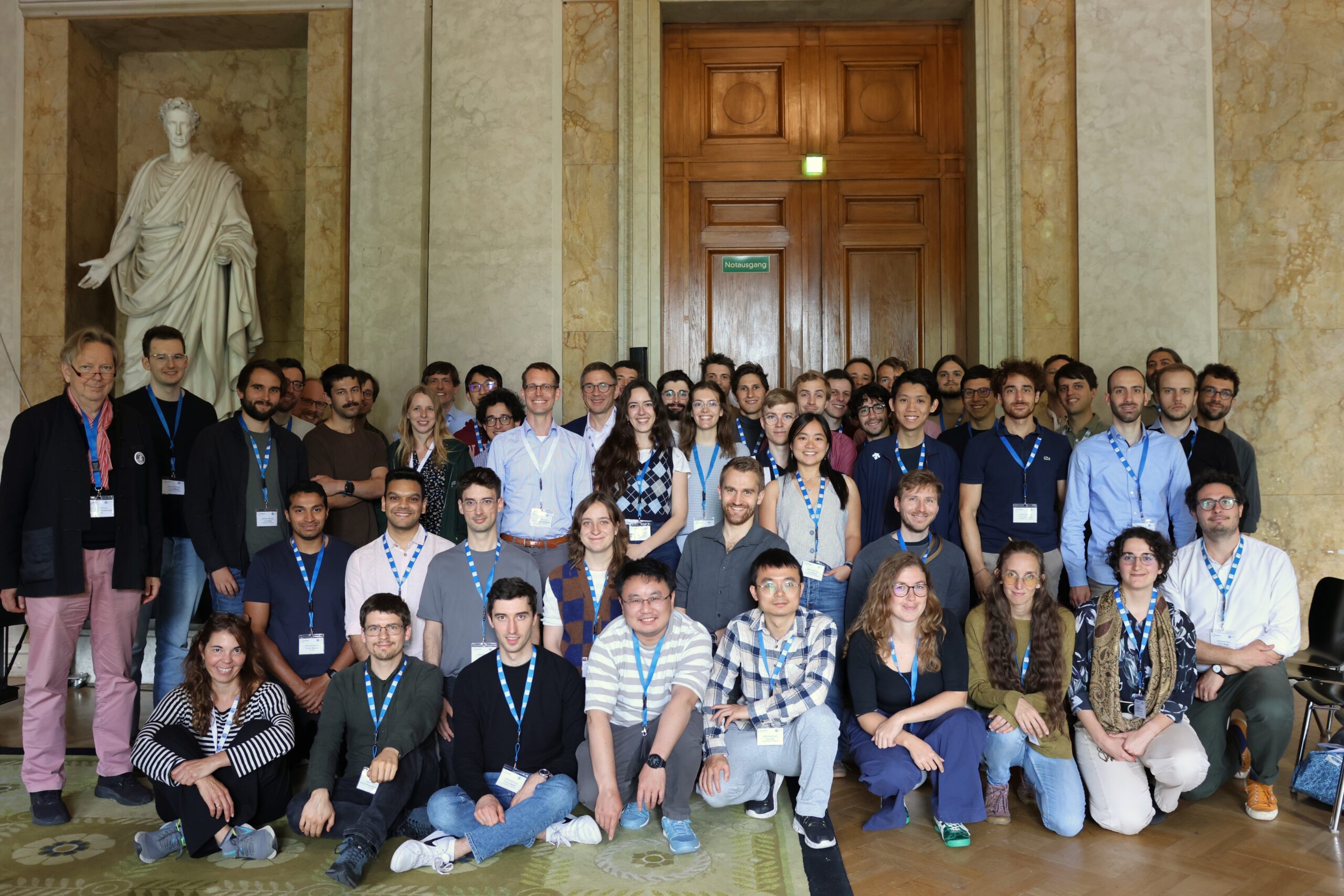
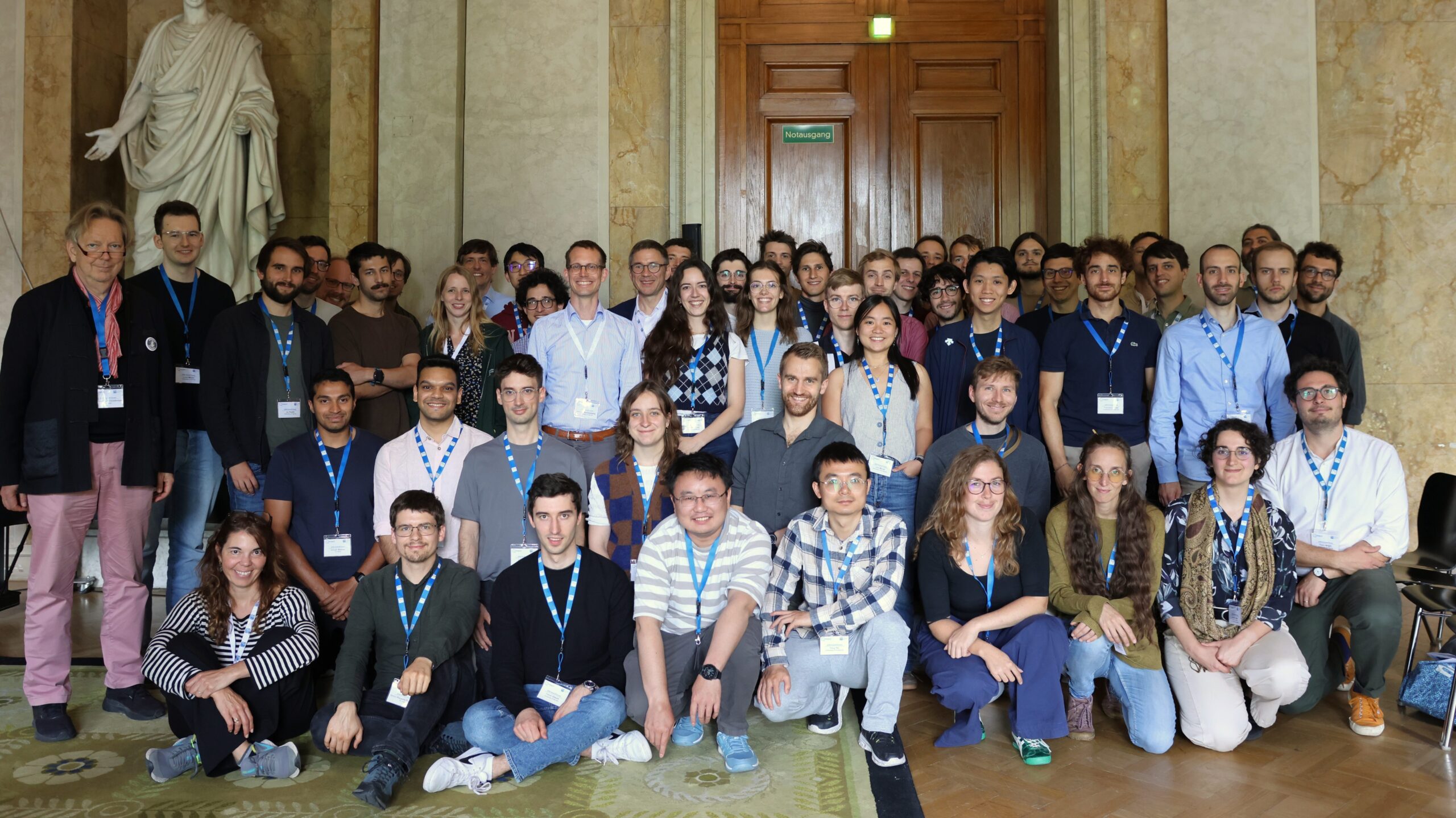
With 67 participants representing five institutions, the kickoff meeting provided a strong and inspiring start to this ambitious collaborative effort, combining welcome addresses, scientific talks from all eight principal investigators, a lively poster session, and an evening of networking over dinner in the heart of Vienna.
A Warm Welcome to a New Collaboration
The day began at 8:30 with registration, as participants arrived at TU Wien’s historic Festsaal to settle in before a morning dedicated to introductions and the programme’s scientific vision.
The programme opened with a welcome address by Prof. Andrei Pimenov, Dean of the Faculty of Physics, who greeted the gathered researchers and underlined the significance of hosting such an ambitious quantum research initiative at the Faculty of Physics of TU Wien.
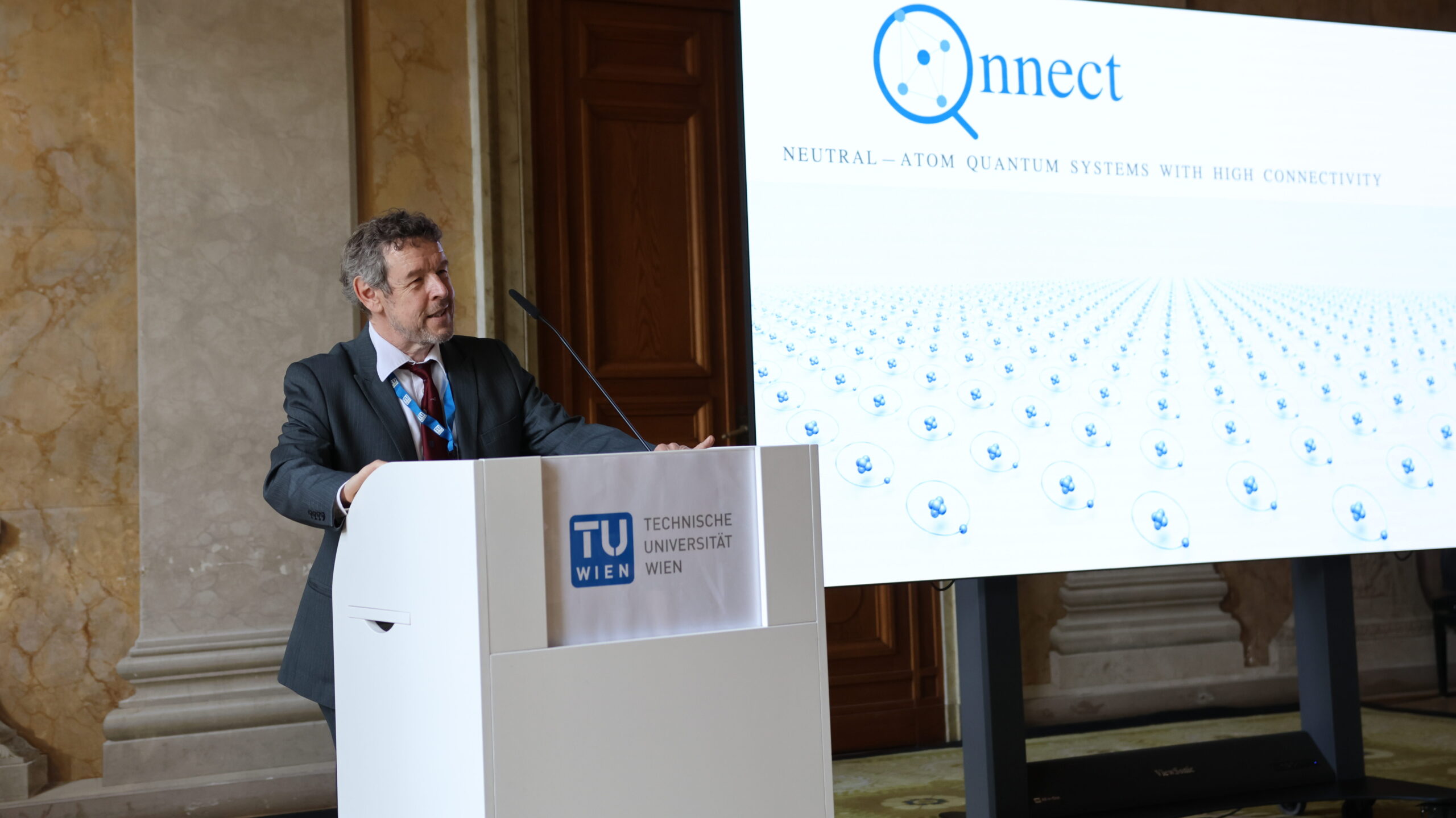
This was followed by a welcome from the Rectorate, represented by Prof. Peter Ertl, Vice Rector for Research, Innovation and International Affairs, and Dr. Elisabeth Schludermann, Head of Research Management and Science Support at TU Wien, who both spoke to the strategic importance of the collaboration for TU Wien’s research landscape.
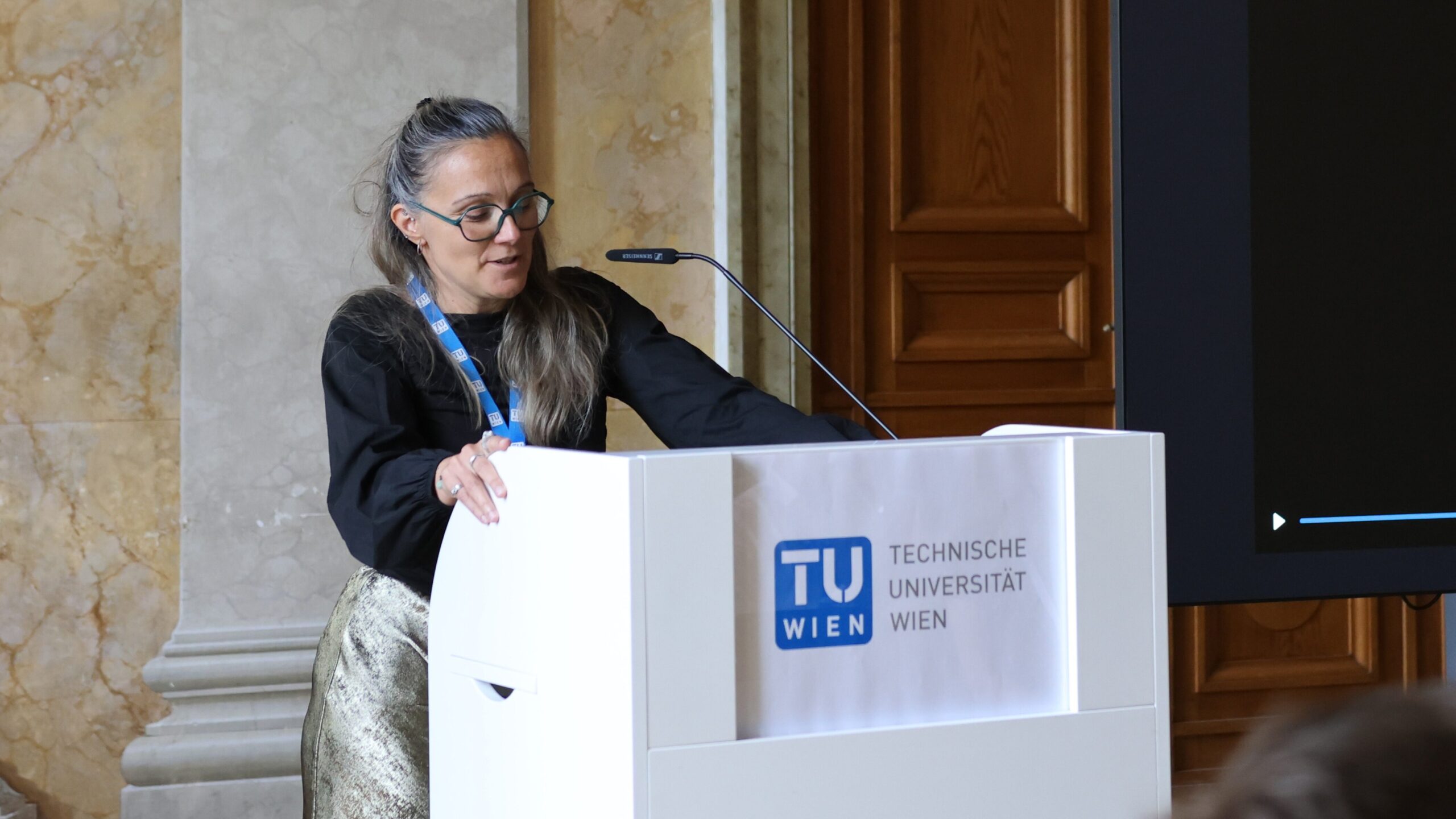
At 9:30, Prof. Thomas Pohl, spokesperson of the programme and professor at TU Wien, took the stage to present „Qnnect at a Glance,“ offering participants a comprehensive overview of the programme’s structure, goals, and the eight research projects that make it up.
„The launch of Qnnect brings together a unique combination of expertise from leading research institutions in Austria and Germany,“ said Prof. Pohl. „We are excited to see what we can achieve together.“
The morning’s formal programme was followed by a Networking & Reception with coffee and breakfast, giving researchers from the partner institutions their first real opportunity to connect face to face before the scientific talks began.
Morning Talks: From Magnetic Atoms to Rydberg Computing
The scientific programme kicked off with Prof. Francesca Ferlaino (University of Innsbruck), who presented an update on magnetic atoms in optical lattices, sharing the latest progress from her group’s work on highly magnetic quantum gases.
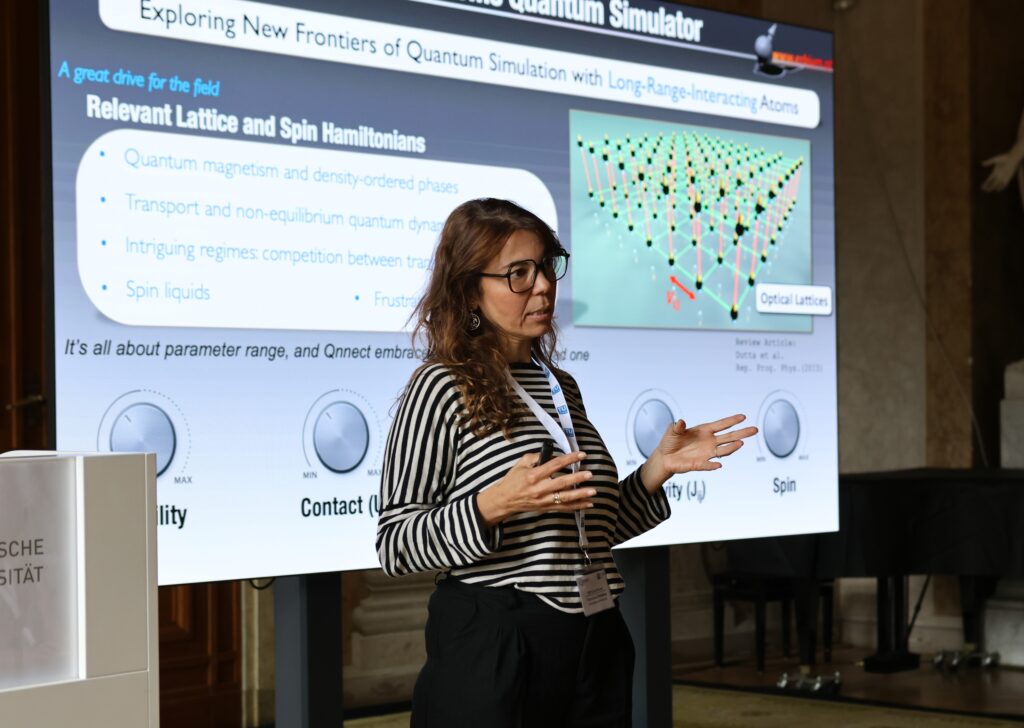
She was followed by Prof. Hannes Pichler (University of Innsbruck), who spoke about universal quantum computing with globally controlled Rydberg atoms — a talk that explored how entire arrays of atoms can be steered with shared control fields to perform complex quantum operations.
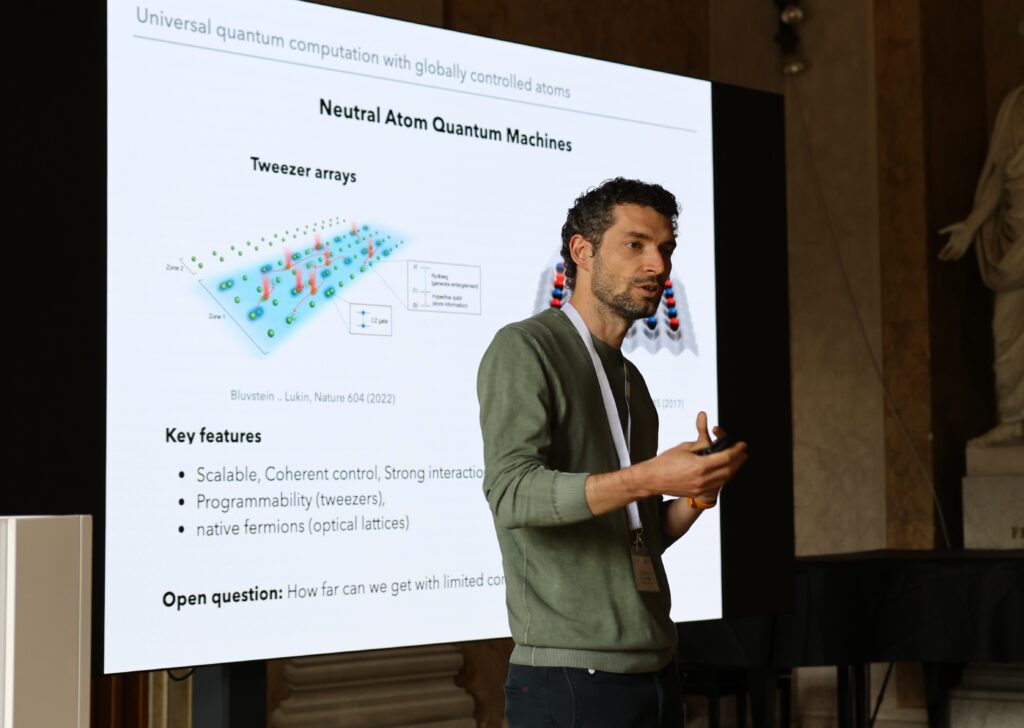
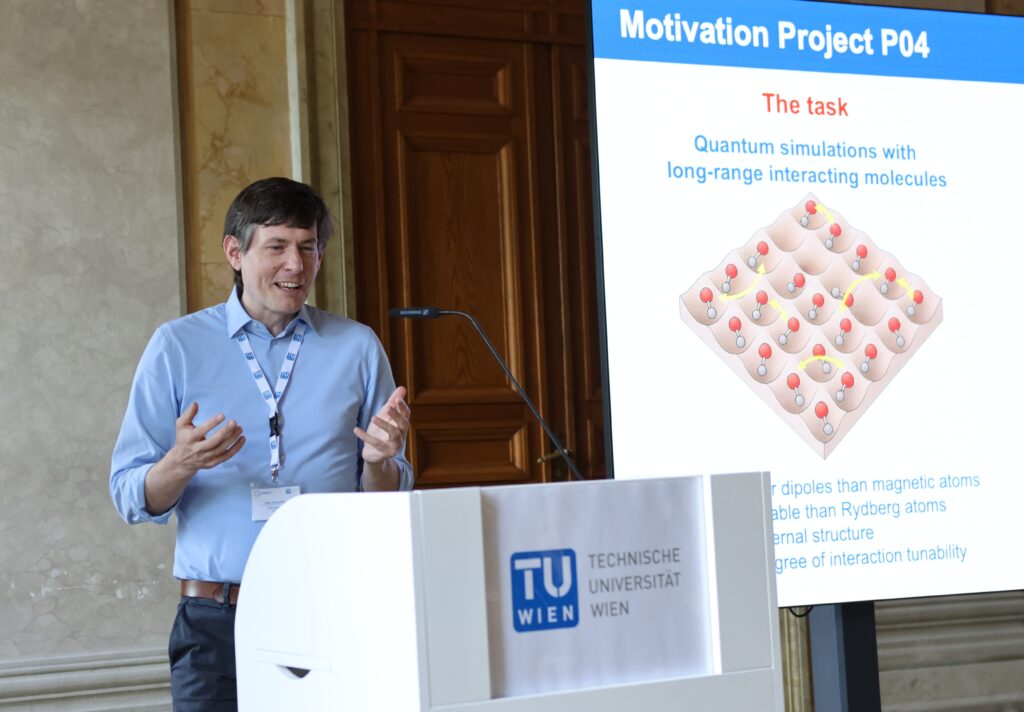
Prof. Tim Langen (TU Wien) closed out the morning session with a talk on dipolar physics with laser-cooled molecules, highlighting the unique opportunities that ultracold molecules offer for exploring long-range, anisotropic interactions.
Participants then broke for lunch at 12:30, continuing the lively scientific discussions over food before reconvening for the afternoon session.
Afternoon Talks: Dual-Species Processors, Dissipation, and Strongly Correlated Phases
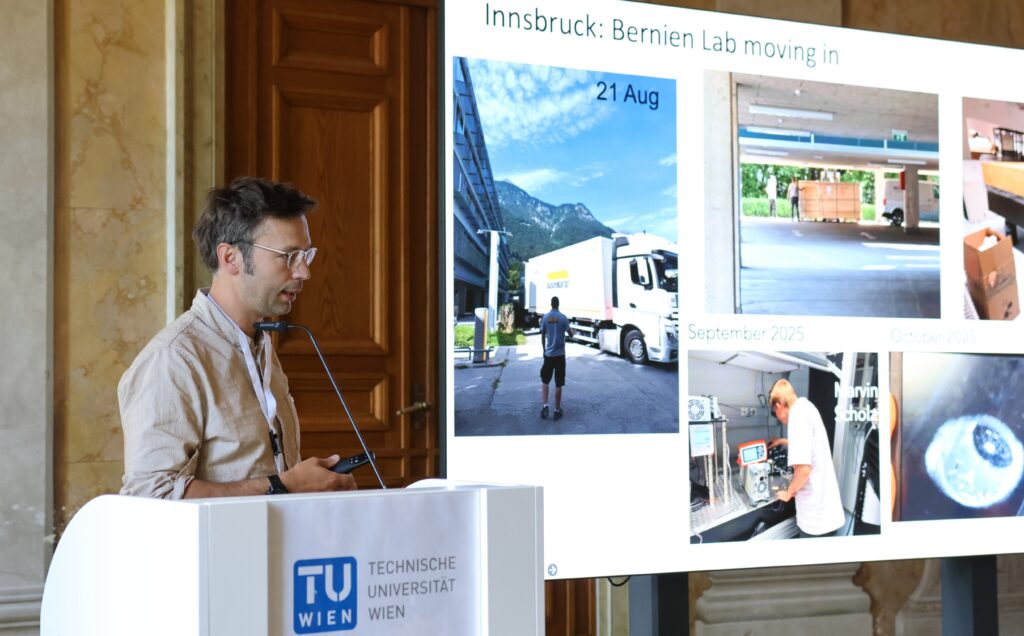
The afternoon resumed with Prof. Hannes Bernien (University of Innsbruck), who presented his group’s work on dual-species quantum processors, demonstrating how combining two different atomic species in a single platform opens new possibilities for quantum error correction and control.
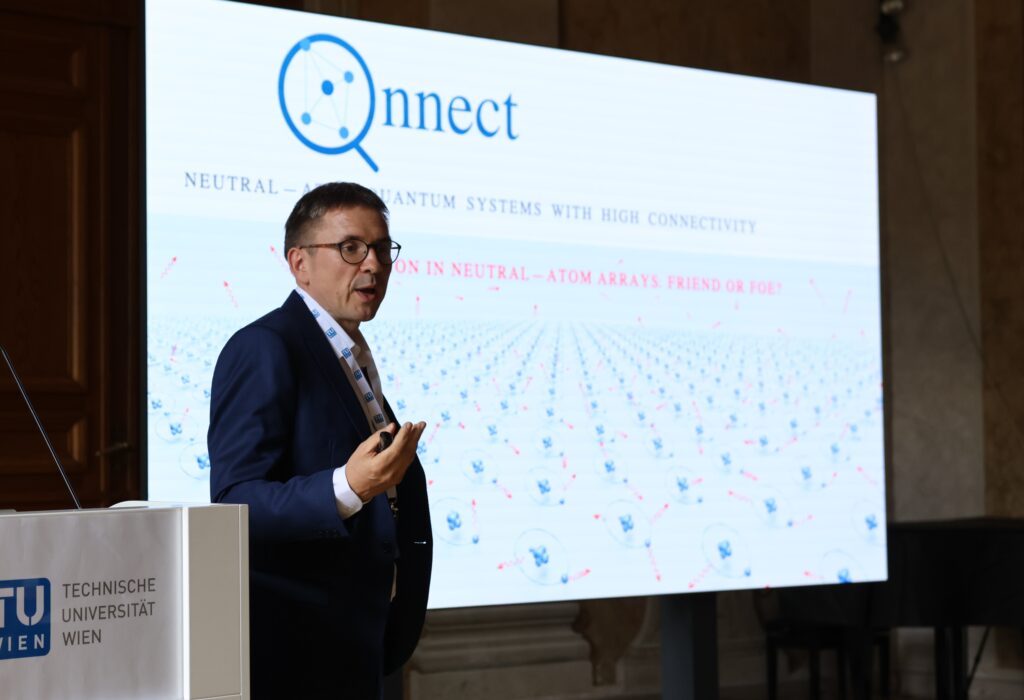
Prof. Thomas Pohl returned to the podium with a talk provocatively titled „Dissipation in Neutral-Atom Arrays: Friend or Foe?“, examining how the loss of coherence in these systems can sometimes be harnessed rather than simply fought against.
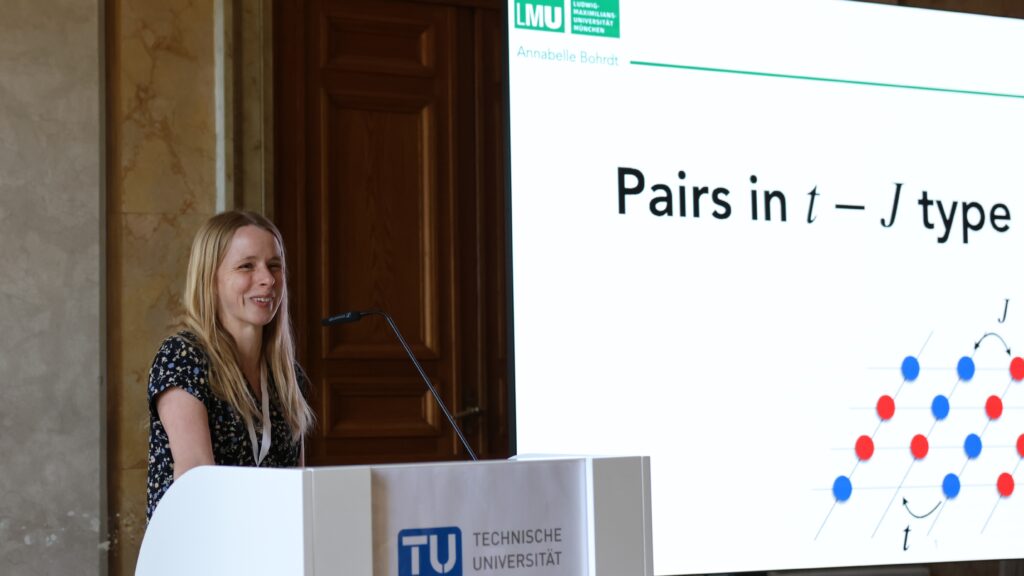
Prof. Annabelle Bohrdt (LMU Munich) followedwith a presentation on pairs in t-J type models, connecting the experimental platforms discussed throughout the day to fundamental open questions in strongly correlated quantum matter.
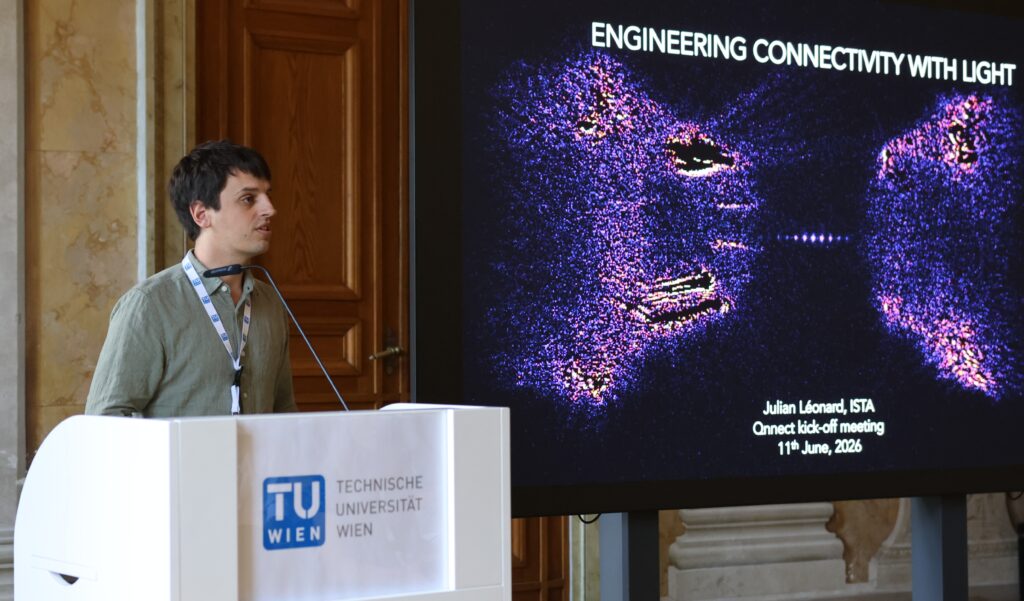
After a coffee break at 15:30, the programme continued with Prof. Julian Léonard (ISTA), who spoke about atomic arrays in optical cavities, exploring how coupling atoms to cavity photons can mediate new types of long-range interactions.
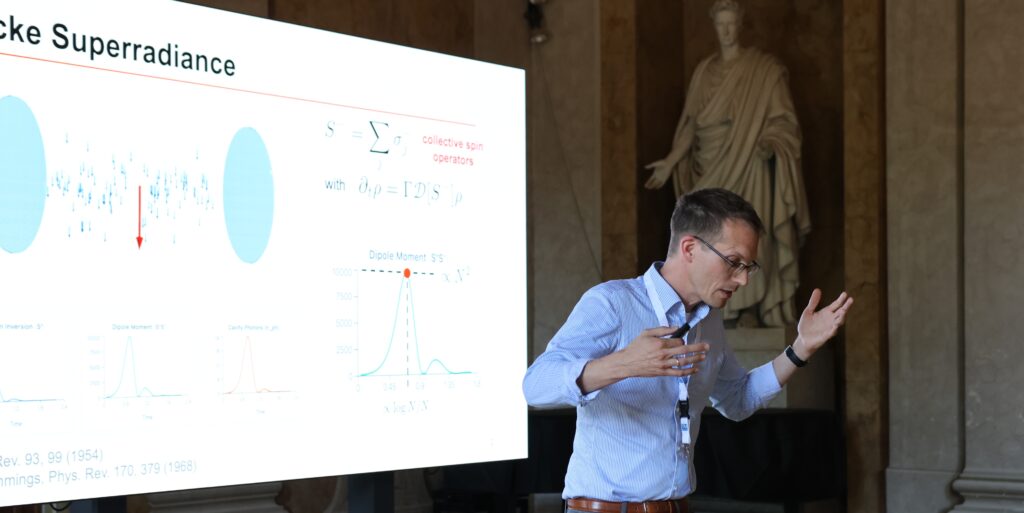
The day’s scientific talks concluded with Prof. Andreas Nunnenkamp (University of Vienna), who presented work on kinetically constrained superradiance, rounding off a full day of presentations spanning the breadth of the Qnnect collaboration — from magnetic atoms and Rydberg arrays to dipolar molecules, dual-species processors, and strongly correlated phases.
Poster Session: Showcasing the Next Generation
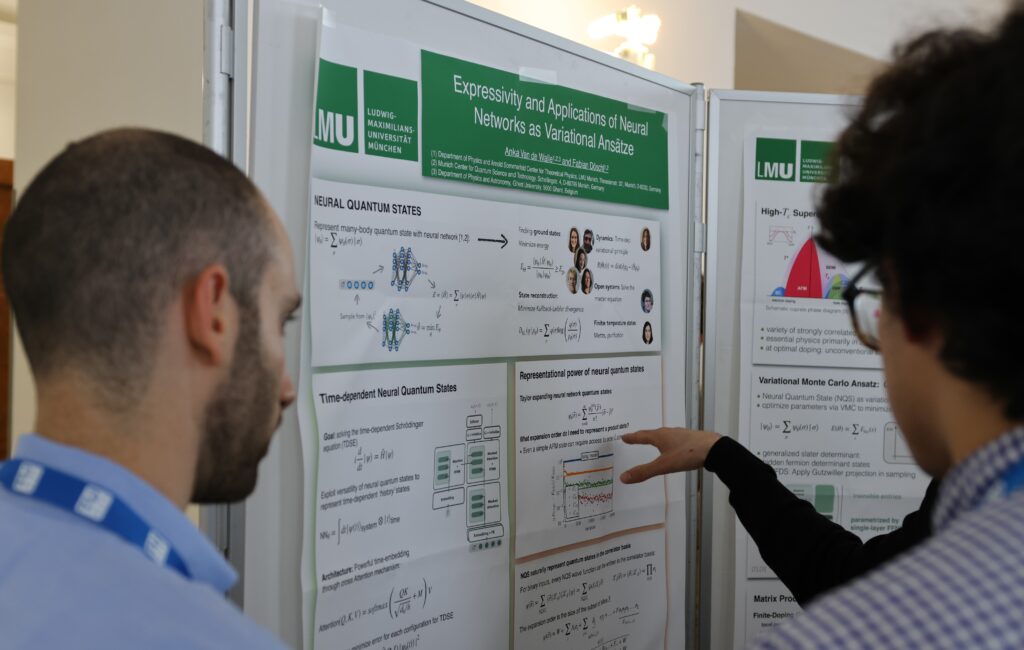
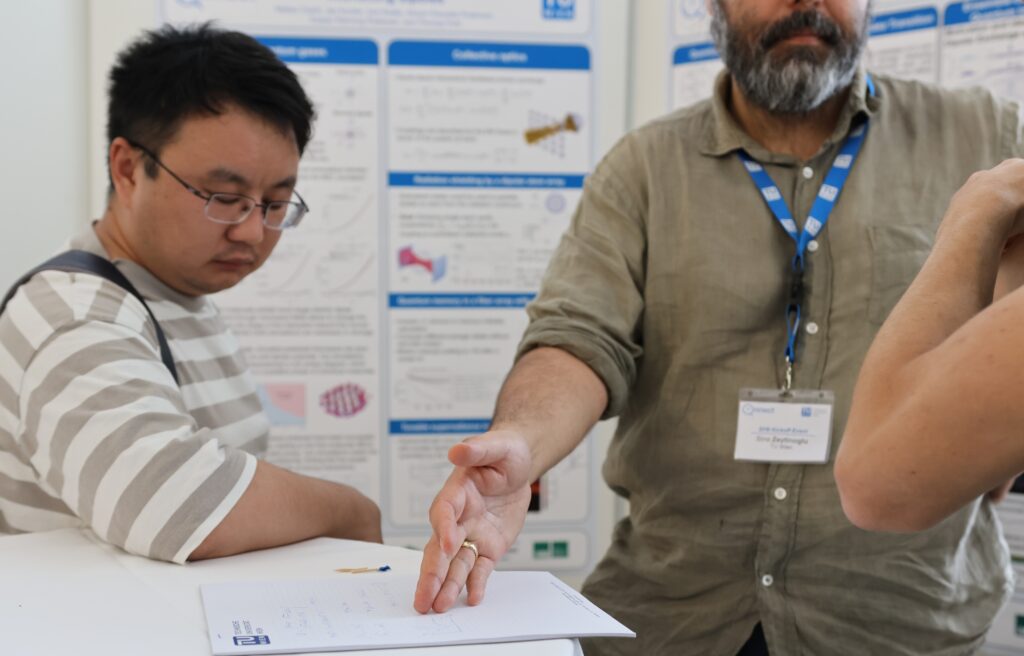
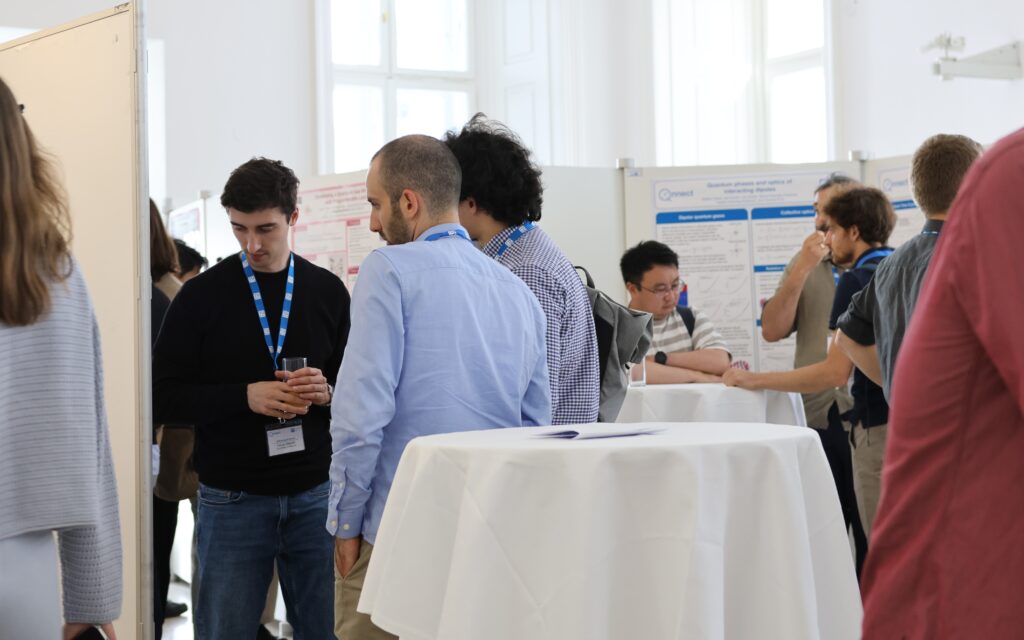
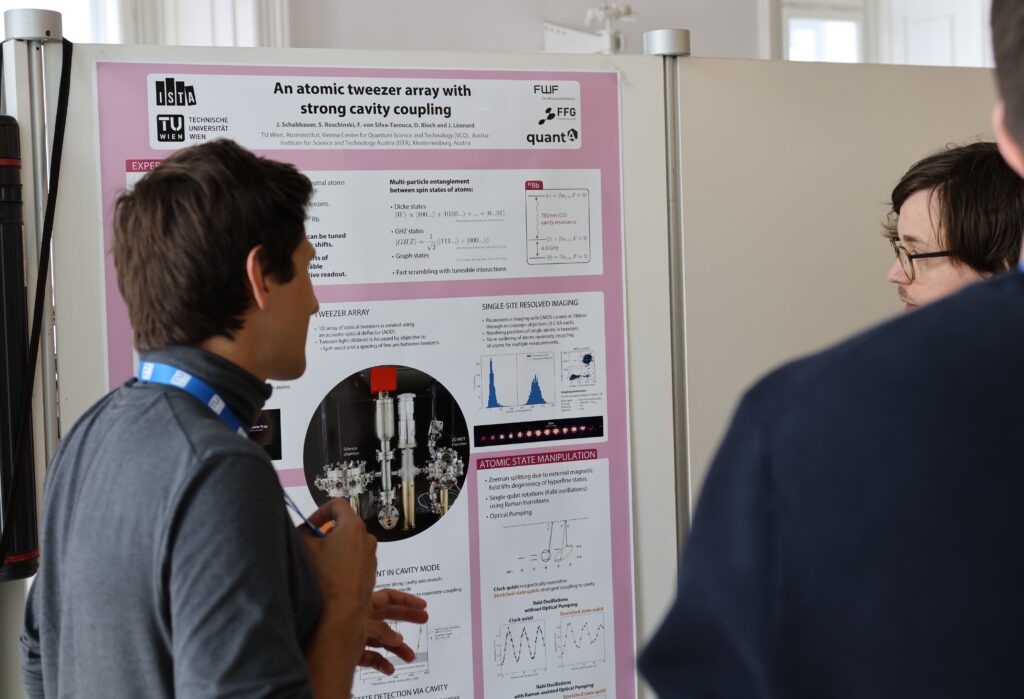
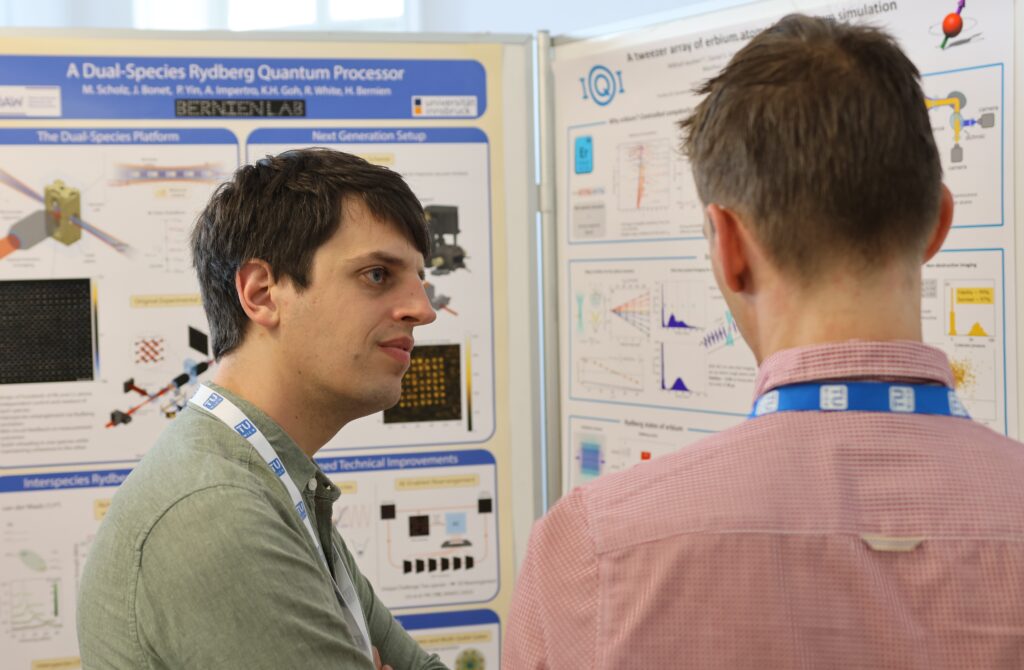
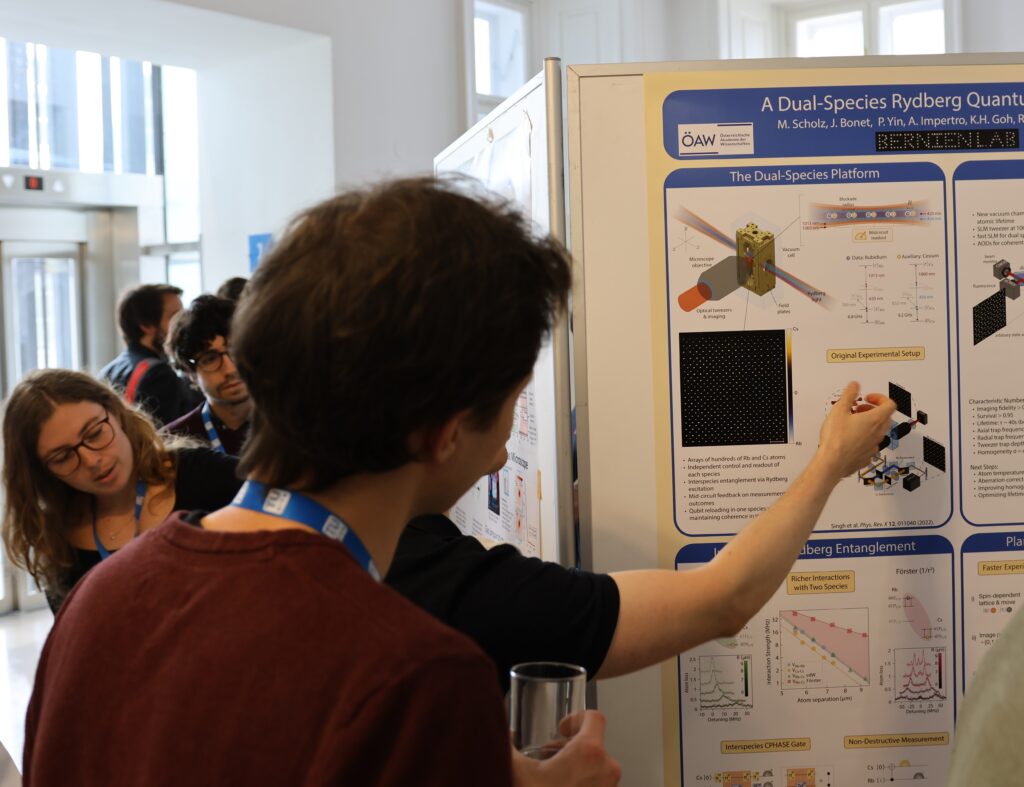
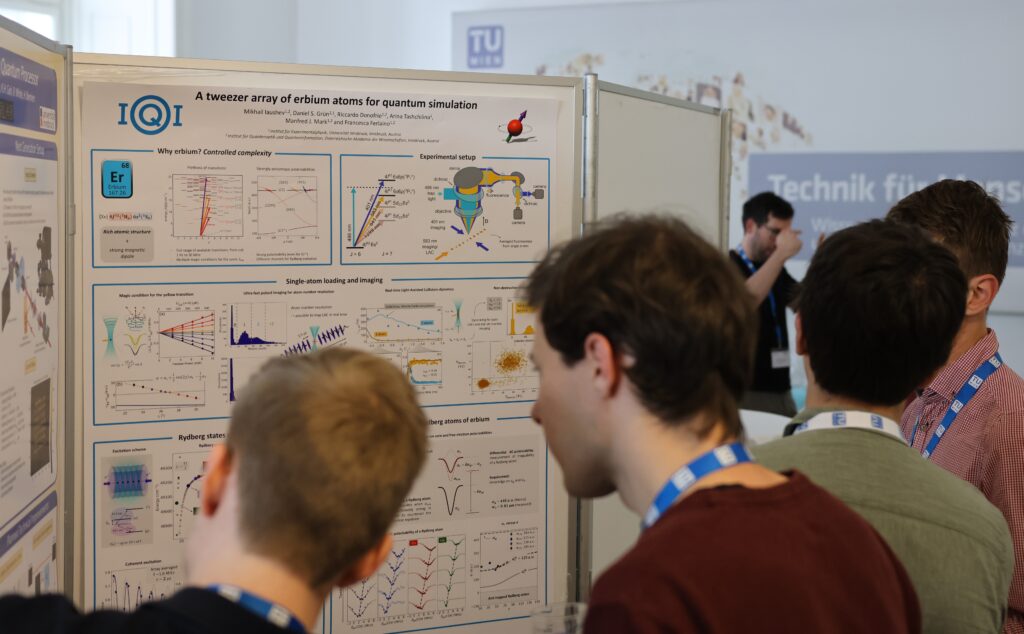
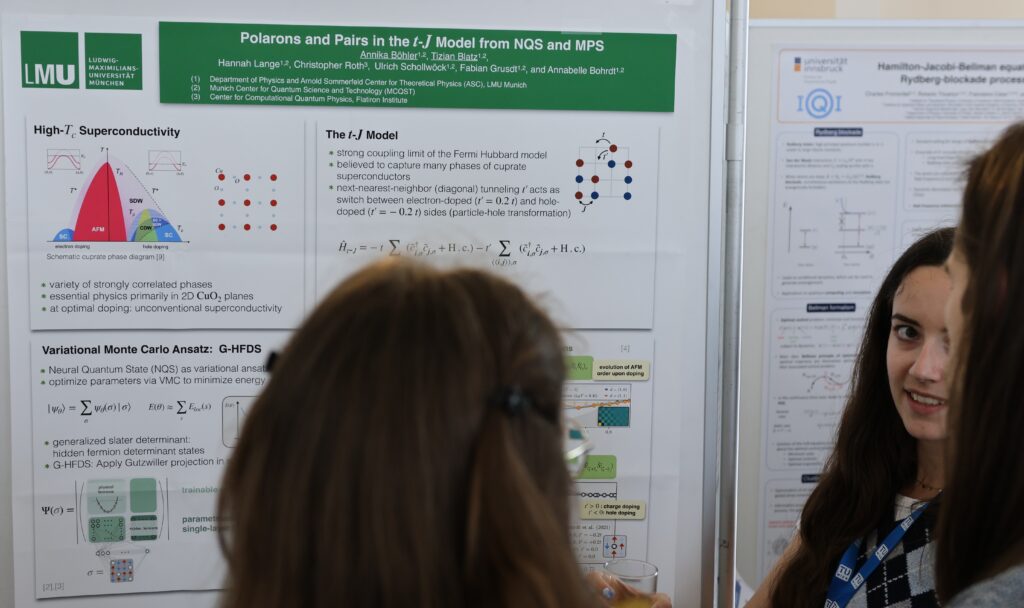
At 17:00, the focus shifted to the poster session, where PhD students and postdoctoral researchers from across the collaboration put their work on display. The session sparked lively discussions and a genuine exchange of ideas, giving early-career researchers the chance to present their results directly to PIs and peers from partner institutions.
The posters covered an impressive range of topics within the Qnnect research programme, including:
- Magnetic atoms in Optical Lattices
- Multi-valence Rydberg atoms in Tweezers
- Quantum simulation with Rydberg atoms
- Globally driven fermionic quantum computation
- Towards quantum simulations with CaF molecules in optical tweezers
- Dual-Species Quantum Processors
- Quantum phases and optics of interacting dipoles
- Non-equilibrium phases and dynamics in Rydberg lattices
- Polarons and Pairs in the t-J Model from NQS and MPS
- Expressivity and Applications of Neural Networks as Variational Ansätze
- An atomic tweezer array with strong cavity coupling
- Developing a quantum gas microscope with programmable lattices
- DysonNet: Constant-Time Local Updates for Neural Quantum States
- Interaction effects on non-reciprocal dynamics in open many-body systems
Three Birthdays
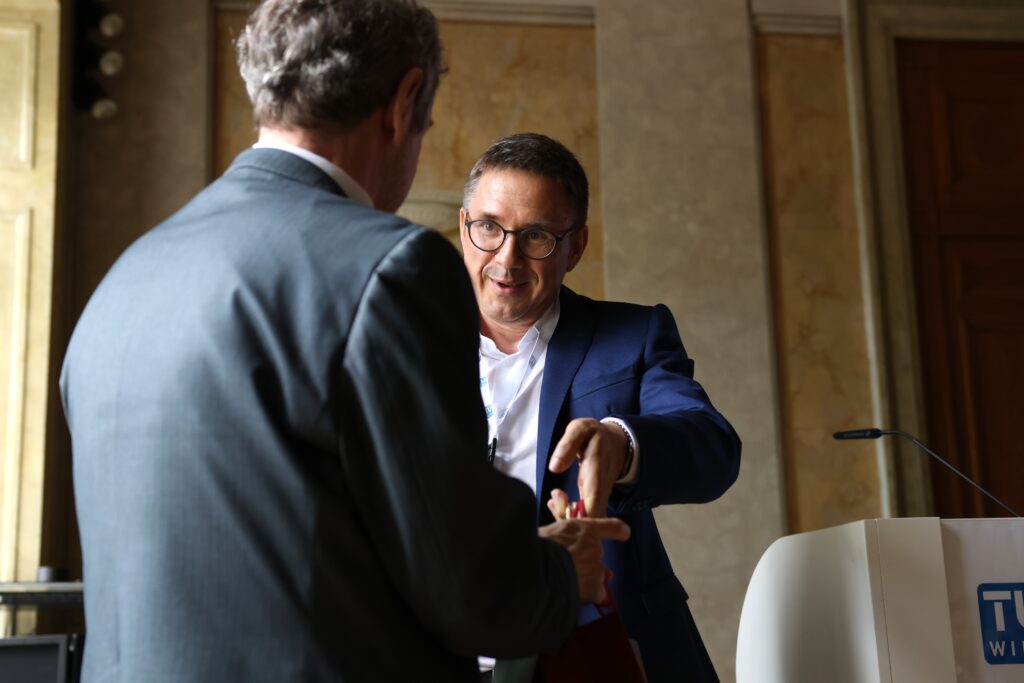
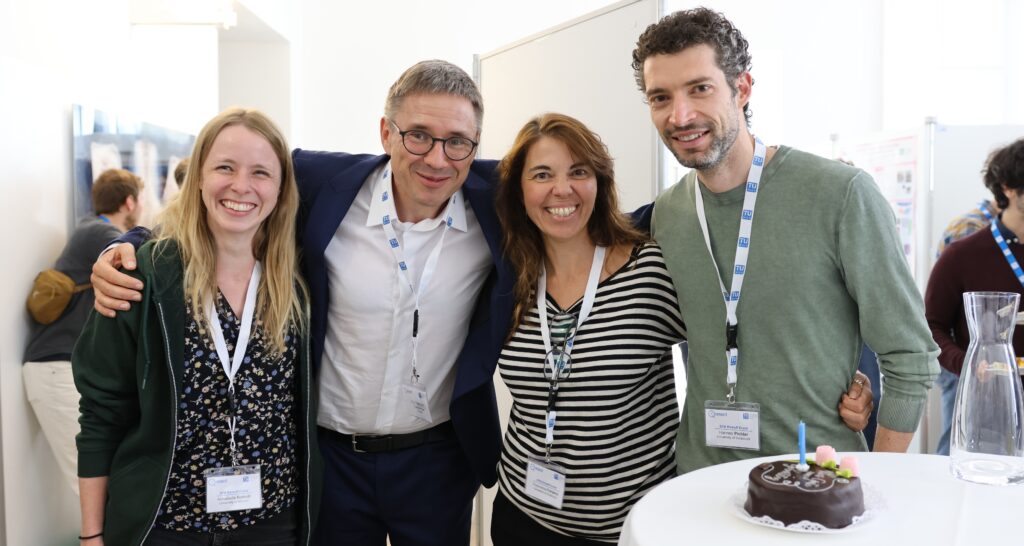
The day didn’t only kick off the new SFB Qnnect, but also brought a special personal note: Prof. Andrei Pimenov celebrated his birthday on 11 June, with PI Hannes Pichler having celebrated his just one day earlier. Naturally, both occasions were marked with proper celebration, as the group took a moment amid the talks and discussions to wish them both a very happy birthday.
An Evening to Remember at Esterházy Keller
The day concluded on a relaxed and convivial note, as participants made their way to the Esterházy Keller for dinner. Set in one of Vienna’s historic wine cellars, the dinner offered a fitting close to an intensive day of science — a chance for PIs, postdocs, and PhD students alike to continue the conversations sparked during the talks and poster session in a more informal setting, and to toast to four years of collaboration ahead.
Looking Ahead
The Qnnect kickoff meeting brought together a unique combination of expertise from leading research institutions in Austria and Germany, setting the stage for four years of collaborative research into neutral-atom quantum systems with high connectivity. From Rydberg atom arrays to dipolar molecules and magnetic quantum gases, the programme spans a remarkable diversity of platforms united by a shared scientific vision: building the next generation of highly connected quantum simulators.